Saturday, June 11, 2016

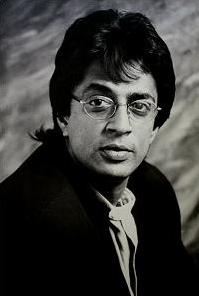
Inspirations - An audio interview with Anu Hasan, author of “Sunny Side Up”

Note: Usually my "Inspirations" write-ups are essays about the subjects of my inspiration.  This one is a little different - it is a Skype audio interview.  Please read on for a bit of context before you get to the audio link below.


Early Morning Sunshine

At 5:28 am this Sunday, two minutes before the start of our scheduled Skype call, I texted Anu Hasan – “Remembered your driver anecdote, which is why I didn’t call early J”  One of the hilarious anecdotes captured in her lovely, sunny book - the aptly titled “Sunny Side Up” - is one involving a driver from a production company.  Known for her amazing punctuality, Anu had had a tough time repeatedly giving this driver instructions that he had to pick her up at 7:45 am.  7:45 am! NOT 7:25 am, certainly not 7:55 am!  This was fresh on my mind ever since she committed to a call at 11:30 am UK time on Sunday (5:30 am in Chicago, where I had traveled to for a conference.)  Let’s rewind to a couple of months back…

The moment I finished reading “Sunny Side Up,” I instantly knew that it was the third non-fiction book, after Randy Pausch’s “The Last Lecture” and Sheena Iyengar’s “The Art of Choosing”, that made me hold a mirror to myself and look intently.  In my opinion, when a piece of literature does something to you, you thank the author.  And, thank them properly.  I wanted to go a step further.  I wanted to understand deeper why I was feeling certain changes in myself.  I had shared my  review with her on Twitter, which she responded to, very kindly.  And, when my wife suggested that I request her for an interview, I did.  And, much to my joy, she promptly agreed.  

Thank you, Anu, for your time.  And, for all the 'sunshine' 
J 

Here's the link to a youtube playlist that contains the audio of our conversation.  Below the link, I have included the list of files in the playlist in case you want to pick and choose topics.  Below are also a couple of quick references (to things in the conversation) for those that may not be familiar with her book or her recent interviews.  Take a look at these before listening to the audio so that you can follow along. 


Jacob – One of the unforgettable chapters in the book is the one on her friends, one of whom was Jacob, who passed away very young (in an unfortunate accident).  She outlines a checkered yet fascinating relationship that came to an abrupt end owing to a cruel quirk of fate. 

The BITS Pilani Advice  – Anu Hasan’s father gave her a terrific piece of advice when she called him from BITS Pilani during her first year.  She admits to venting her frustrations only to be asked by her Dad, “Why do you think I sent you there?”  When she innocently responded, “…to study,” he told her, “No, I sent you there to learn about life.  You just did.”

List of Audio Files in the Playlist:
  1. Introduction and about "Sunny Side Up."
  2. Writing Non-Fiction - Cathartic or Difficult?
  3. The Inner Voice called 'Rationale'
  4. The 'Triggers' of Temper
  5. Dealing with People that wear a Mask of Smugness
  6. Fitness - A journey to be enjoyed
  7. Essaying a Role Effectively
  8. Balancing Creativity and Efficiency
Links to Anu’s Youtube channel and Facebook page:

Friday, May 27, 2016

Free Yourself To Be Generous

My maternal grandma turned 80 on Monday.  After I wished her on the phone, my mind harked back to my school and college days when I would have a bunch of friends over.  Looking back, I feel like I used to take her generosity for granted.  The generosity with which she cooked a sumptuous meal or served steaming hot filter coffee (Idhu Bru ille ma!) or bournvita for my friends.  The warmth with which she would chat with them, inquiring about their family members and most importantly, being lavish in her praise for what they achieved as students.  These are things that just came so naturally- and continue to come spontaneously- to her.  As I grew up, as I stepped out of that comfort zone that my family had afforded me, I have had the fortune of getting to know some wonderful, salt of the earth people.  Invariably, I have also gotten exposed to folks in my personal and professional lives that aren’t going to win any awards for generosity!  It is when I introspect enough do I realize and appreciate what was in plain sight – in people like my grandma- that I was blind to, in my formative years.  This is in no way meant to suggest that I am as generous as say my grandma is.  I am fully aware of my shortcomings as a person.  But I’d like to think that I learn from not only my mistakes but also the failings of those in my social circles.  And, two things that I have realized over the years are (1) Being sincerely generous in praise requires one to feel fully secure of oneself and (2) You will never, ever lose a thing by praising a well-deserving peer in any setting.  These may not necessarily be truisms.  But as I reflect about what I like to see in others, over the past few years, these are values that I believe in unquestioningly. 

One of my past acquaintances – planting my tongue firmly in cheek, let’s call this person Mr. G (for generosity!) – had this habit of never acknowledging a single piece of good news.  I once shared with him the news of my getting promoted at work.  In response, G helpfully pointed out the clunky office furniture in my past job and how he felt a little relieved for me now!  If this were an isolated instance, I would not have been hasty in judging him for what might have been intended as a small joke.  But this was one of several instances where I could see this person having the heart to speak in praise of his close family members but not so for others.  On certain occasions where I might have shared a piece of good news, there would be puzzling silence and an absence of any response at all.  (FYI, I think I’d take silence over a bad joke!)  Over time, this repeated behavior made me question not only this person’s generosity but also whether G was truly secure and contented.  On the other end of the spectrum, one of my uncles is quite a reticent person.  But as a man of few words, he is extremely sincere in praise even if the words are limited, sans frills.  He is honest when talking about a person’s faults and unfailingly courteous when providing any constructive feedback.  I would attribute it to how comfortable he is with himself.  That quiet self-confidence, I have seen, goes a long way in making one feel genuinely happy for others.  It’s not about the words as long as your genuineness is realized by the recipient of your gestures.

If I were to be brutally honest about myself, I’d say that it was my years as a business school student (from 2007 to 2009) when my thoughts on generosity became better fleshed out and I could evolve as a person, not just as a student.  Prior to going to b-school, when I was much younger, there were periods when I was not as generous in my feelings towards others.  But as I worked extremely hard as an undergraduate student and as a professional (for five years, until I quit my job to do an MBA, in ’07), I was able to develop more confidence in myself.  And, as a b-school student, I began to read a lot about maximizing your own potential.  And, professors like Dr. Robert Kelley (author of the fantastic book, “How to be a star at work”; I have written about him in my Inspirations series as well) spoke about how you become a star not because of what you are born with but because of how you use what you have.  These kinds of positive thoughts helped me erase a lot of self-doubts that had plagued me a bit even when I was successful in my undergrad years or as a professional, prior to my MBA.  And, it’s not as though I have not had to face adversities in any aspect of my life.  I have, like anyone else.  But regardless of my own personal or professional highs or lows, I continue to make sincere attempts to be generous towards others while I work towards two things - contentment with what I am blessed with (i.e, the ‘uncontrollable’ elements) and a commitment towards achieving what I want to achieve (with my ‘controllable’ traits).  And, back to the second point that I had raised earlier, when I am secure with myself, I have never felt that I have lost anything or disadvantaged myself when I am generous towards someone, being happy for what they may have done or what may have been handed to them. 

In essence, as soon as you free yourself from the shackles of self-imposed mental barriers or self-doubt, one can truly feel happy for and more generous towards others with their emotions.  That way, we don’t have to say that they don’t make them like my grandma anymore!  Maybe one day, G will stand for generosity even when I take my tongue off my cheek!

***
A related post on this topic, one that’s very well-written (by Rahini David):

https://femininetosh.wordpress.com/2016/04/06/on-paying-compliments/

Monday, May 16, 2016

My phone call with Suresh Krissna (the director of Aaha)

If you know the title of the book co-written by film director Suresh Krissna, you will realize the small irony of the title (and the film mentioned in the title) of this post!  Krissna's book was titled, “My days with Baasha.”  In that book, he lovingly recollects many of the behind-the-scenes moments of his four movies with Rajni - Annamalai, Veera, Baasha and Baba.  But to me, the crown jewel of Krissna’s career - and, I said this to him - has been Aaha.  And, at the very least, I wanted to do two things in this call with him – to express my admiration for the movie.  And, to learn a bit about how he approaches his craft.  Only a few days ago, I had requested him for a 30-minute call.  (Special thanks to Rekhs for introducing me to Krissna.)  And, he kindly agreed.  10 minutes before the agreed start time of our call, I received a message from him that read, “Hi Ram, I am ready…10 min before schedule…U take ur time J”  Continuing in the same vein, in our call, he came across as extremely warm, humble, generous in his praise of his team members and pragmatic about the evolution of cinema and television in recent years. 

In recollecting his experiences of making Aaha, he credits the late Ananthu (who was K Balachander’s Man Friday and Kamal Hassan’s guru; as an aside, Krissna was a KB protégé) with planting the genesis of a movie that would be markedly different from the kinds of movies that Krissna was making till then.  When we spoke, he fondly referred to Ananthu as a “walking encyclopedia” who invested him with varied perspectives based on his rich exposure to world cinema.  At the same time that Ananthu was goading him to step out of his comfort zone, Krissna also had a producer (R Mohan) approach him to do a “nice, compact, sweet film.”  And, the result of the Suresh Krissna (story, screenplay, direction) -Ananthu (co-screenplay writer) - Crazy Mohan (dialogues) combination was, of course, a film that was way beyond just a nice, compact, sweet film – it was a deeply sensitive, genuinely funny, touching tale with some remarkably lifelike characters. 


Click on the link below to hear Krissna’s 10-minute story of how Aaha came to be made as well as the touching story of a fan whose real life situation resembled the climactic portions of Aaha but not quite:


Changing gears, I was interested in hearing about his experiences working with character actors.  I asked him this question since I have noticed that his films have had some stellar performances by actors in character roles – Manorama in Annamalai, Sarat Babu in Vedan, pretty much everyone in Aaha (!) and so on.  He spoke fondly of the nurturing that he had received when he had apprenticed under KB and how the latter would focus on extracting something noteworthy from the smallest of actors.  And, talking of character actors, to me, the best part of my conversation was when Krissna spoke of Raghuvaran.  It was extremely touching to hear the pain and affection in his voice when he spoke of his friend.

In the clip below, he speaks of his friendship with Raghuvaran as well as his experience in working with Manivannan in Sangamam (another great role and a wonderful performance).


I was also interested in hearing about his rapport with cinematographers since certain films of his have had absolutely top notch production values but don’t always get lauded for them.  And, from his response, I could gather why.  He spoke of how, for instance, cinematography should serve a purpose and not call out attention to itself.  He gave me the example of Aaha where the primary purpose of the camera was to give a feeling that we were in the house with those lovable characters.  So, the framing of the foreground and background and how characters came in and out of the frame was to take away the feeling of a stage drama (given the extensive interior scenes in the movie) and instead, give a feeling that you were in the midst of people that were behaving naturally, not acting out a scene.  I haven’t seen the Telugu remake of Aaha but he mentioned that the Gokulakshtami sequence in this version was done in one, uninterrupted 10-min shot!

In the clip below, he talks about cinematography that serves a purpose:


Towards the end of our conversation, we spoke of his recent work in television.  It was reassuring to hear that one of his goals was to take his sense of aesthetics to the small screen.   And, one of his other attempts is to blur the lines between the silver and the small screens.  To this end, he has made a movie titled, Hitler: Engirundho Vandhaan (shot in nine days, replete with two songs) that will be telecast on Zee Tamizh on May 29 at 3:00 pm.  It features seasoned veterans like Delhi Ganesh and Devyani along with newcomers.  Knowing his work, I am sure it will be a well-written, well-made film.  Below is a teaser:


As we inched towards the 30-min point of our conversation (that he had agreed to), he realized - without my saying it out loud - that I had a few more questions left!  And, he graciously agreed to giving me 15 more minutes.  I was bowled over by his kind gesture.  A day after the call, I listened to the recording (of our call).  Above everything else, what struck me was the gratitude, affection and recognition that he accorded to everyone that he had worked with, starting with his gurus KB and Ananthu to every actor and technician he had worked with, without an iota of rancor about anyone whatsoever.  After I listened to the recording, I finally realized where all the kindness, warmth and feel good vibes in Aaha came from!

***

Images Courtesy of Suresh Krissna's website - http://www.sureshkrissna.in/ ; Youtube videos of Aaha; www. royalisai.net 

Sunday, May 8, 2016

A Mother’s Day Prayer for women that long to be a Mother

First things first: earlier today, I wished my mother, my mother-in-law and my wife.  I am completely respectful of all of the love and affection that they shower upon me and my son.  But here’s the thing - this post is not about them.  I have wished them personally today.  I have prayed for their well-being, in private.  But I will have to write about them later in a separate post.  This post is about those women that I know (and frankly, even for those women that I don’t know personally; after all, this is meant to be a prayer) that have not been blessed with a child of their own and yearn for one.  Amidst all the pink balloons, greeting cards, twitter messages and facebook posts that have been flying thick and fast today, I’d like to spare a moment to think about some of the wonderful women that I have known that have gone through deep anguish, feelings of hurt, moments of loneliness and even the feeling of being let down by the Almighty as they continue to long for a child of their own.  It’s just not fair.  Without exception, these are wonderful people, blessed with the kindness of heart, generosity of spirit and I dare say, a truly, deeply maternal attitude that they extend to those that may have not been their biological children but nevertheless...The very least I can do is to be acknowledging of a vacuum that they may have experienced in their lives and pray to God to not let them down any more. 

(Three quick notes before I proceed any further– (1) Since today is ‘Mother’s Day,’ I am writing about women, though I have also seen men go through equal amount of suffering.  (2) This post is not about women who have chosen not to have children.  I am absolutely respectful of their choices.  This is just about women that have longed for a child but haven’t been blessed with one yet.  (3) I am taking the topic of adoption off the table.  It is an extremely personal topic for the people concerned that I don’t feel right to include it in this post which is more of a lament and a dirge.)

When I was in my teens, following my grandpa’s death, I went through a rather long, painful phase when I began questioning the existence of God.  I just could never fathom his sudden passing away.  As a kid, it felt totally unfair that my grandma went to the Srinivasa Perumal Temple in Mylapore every goddamn day (pun intended for sure) and yet God felt the need to take away my grandpa one fine day in a freak accident when he was only 61.  Many people tried to ‘explain’ things to me.   I got some well-meaning advice from people who either spouted clichés (“Mysterious are the ways of the Lord”) or said things that felt downright inane (“Maybe your grandpa would have suffered from health issues later in life and God didn’t want that.”  Yeah right, I thought!).  None of that swayed me the right way towards comfort or closure until I had a thought that gave me a reasonable amount of closure years later, when I was in my mid 20s.  And that thought was, I don't have to believe that God is perfect.  The moment I started taking the perfection element out of God from my mind, the better fleshed out my spirituality and piety became.  And that is because my response to any suffering experienced by my near and dear is, “Dear God, you have let person X down.  Could you please fix it?”  Actor Parthiban once wrote a wonderful line, “Uruvam Thavirthu Unara Thodangu…Kaadhalo…Kadavulo.”  Of course, if my prayers were so potent, I would not be writing a post like this where I continue to see people suffer.  But that ‘unarvu’ part that Parthiban writes about is what I experience deeply, intensely.  That form of a silent prayer is the only way that I can feel less indignant and more hopeful.  Any discourse or defense of the Lord as a 'perfect' superpower drives me up the wall.  I may be right, I may be wrong.  But as paradoxically as it may sound, the lack of deifying the Lord is the only way I get comfort out of an unknown force when I see my fellow human beings suffer in myriad ways, one of which is prolonged longing for a child of their own.

Since this is an extremely sensitive topic, I don’t want to mention names or even define any characteristics of specific people.  But there’s one person I know in a professional setting, who has always been a fantastic leader.  She has always cared for her team deeply, made sure that they felt a sense of belonging and that she did everything she could to back them and make them maximize their potential.  She does not have any children of her own.  Truth to be told, I have never heard her speak much about this.  But on multiple occasions, I had seen deep hurt in her eyes when someone asked if she had children.  It used to amaze me the enthusiasm with which she organized baby showers at work for her team members before they would go on maternity leave.  It will be no exaggeration to state that she treated her team members with an almost maternal attitude.  During any of her team members’ personal crises, she was a rock solid pillar of support…like a mother.  Since this is an extremely delicate topic, I have never and would never be able to say out loud to her that she can consider me a son that she never had.  But I have tried my best to be as nice to her as possible and as reciprocal of her generosity as I can.  So, in a way, I don’t need to say it out loud to her; I can possibly try to speak louder with sincere actions and thoughtful gestures the way she has always interacted with her team members

It is when I think of people like these that I feel like beseeching the Almighty: if we mortals are HIS children, should HE not give his children – that want to be blessed with children of their own – the joys of creation that HE experiences when we enter this world?  I fully realize that this is a loaded question, the answer to which I will never receive from any trusted source!  But as I wrote earlier, instead of searching for answers, I will continue to pray to the unknown force above me to not let his children down.  And, I will continue to place the women, like my former colleague, on an even loftier pedestal than I place the unknown force above me.  I don’t mean to sound sacrilegious.  It’s simple logic – I am sorry to say but I have seen more perfection in these children of the Lord than I have seen in the Lord HIMSELF.

Monday, May 2, 2016

Life’s Little Teachers: A few anecdotes, a few lessons

One of the things that I have realized as I read books like Randy Pausch’s “The Last Lecture” and Anu Hasan’s “Sunny Side Up” is that the more aware one is, the more memorable are the little moments and those little lessons that life affords us.  These moments and the people that I mention here might not merit a place in my “Inspirations” series.  But in their own way, these mostly positive memories have stayed in my mind for a very long time.  So, without further ado, here you go:

(Disclaimer – Over the years, I have been the lucky recipient of some tremendous advice and several golden nuggets from my near and dear.  I have not included those ‘big’ moments and epiphanies in this list and instead, have chosen to focus on smaller moments and incidents.)

“Arab Exodus” – this is one of my favorite memories from my high school days.  One of my class mates Vijay was a brilliant student who had amazing powers of concentration.  He would always listen to lectures intently while the less serious ones like yours truly would be blithely unconcerned about the lecture and instead engage in ‘meaningful’ (!) debates with our bench mates on topics such as, "Who is the better music director?  Ilayaraja or Rahman?"  And, when we took notes, the rest of us would usually copy what was written on the black board by the teacher.  I didn’t know what Vijay's notes looked like…until one day, when I borrowed his history notebook since I had been unwell and had missed classes the previous day.  As I started going through it, I was quite stunned – he had not only absorbed the essence of the lecture's contents but also summarized it in crisp phrases that demonstrated his keen understanding of the material.  One of his section headers is still absolutely fresh in my mind – “Arab Exodus.”  Especially because it was not a term used by the teacher!  The usage of the word “exodus” - which I thought was splendid for a 13-year old - was his.  The style of notes was entirely his!  It's still something I remember fondly when I take notes during meetings at work!

“Please give him some water first” – My Dad’s work had brought us to the US in 1998 after I had completed high school in India.  My Chithappa had lived in the US since ’81.  So, while I had grown very fond of him thanks to his few trips to India, I had spent quite a bit of quality time with him when I had visited the US in ’91 as a 10-year old.  One thing that I remember vividly was his quiet, understated compassion towards my grandparents (who had lived with him).  In ’98, I was to witness another instance of that genuine compassion towards his loved ones.  My Dad had rarely run on the treadmill.  But when we were in my Chithappa’s house, he decided to give it a try.  Without warming up enough, he started to run at a fast pace.  After a few minutes, I heard an almighty scream…literally.  My Dad was screaming, “Narayana!”  He had gotten off the treadmill, was panting for breath and was in tremendous discomfort.  I started chiding him for not heeding my well-meaning advice.  My Chithappa calmly walked up to me and said, “Please give him some water first.  You can chide him to your heart’s content but don't do that now.  At least wait till his pain subsides.”  Simple words but some chords were struck, I’d like to think. 

Ken’s priorities - While in business school, I was studying for the final exam of an Operations Research course.  There were two broad areas to study: 1) theoretical concepts and 2) case analyses.  The Professor had mentioned that the exam would contain some pointed questions from the cases for which we had to re-read all of the cases at least once before the exam.  I called Ken, a peer of mine the night before the exam to ask some clarifying questions.  I also casually asked what material he hadn’t studied as yet.  He replied, “Ram, I still have to re-read some of the cases.  But I am going to first make sure that I finish studying all the theory material.  If I miss some specific case related questions on tomorrow’s exam, I might not get a great grade.  But more than that, I want to make sure that I have gotten the theoretical foundations from this class well.  That’s what is ultimately important, right?”  I muttered, “Oh, yeah…” and that was the end of the conversation.  But it was only later when I reflected on what he said that I appreciated the significance of his words.  The night before a final exam that was worth 40% of the course grade, here was a person who was calm enough to have a clear mind and a clearer goal: learning the material well. 

“Sachin runs hard…” – I once asked film director Vasanth whether it’s ever bothered him when the actors in his movies sometimes walk away with more laurels than he does.  I asked this question not to feed his ego.  But instead, I knew his style of direction which is to act out every scene for every performer.  He smiled and said, “Sachin runs hard even when he’s the non-striker!  In the end, it’s a run for the team!”  Probably owing to the cricket analogy, it’s something that played a small but meaningful role in making me a better team player.  At least, I think so; I must check this with my teammates!

Now to my last story below... This is a personal favorite.  It’s slightly long but read it and you’ll see why.

The street sometimes makes you smarter – One of the chief pleasures of street cricket is that when taken seriously, it can teach you a lot of nifty little lessons.  There is one ‘series’ (it was dead serious I tell you!) that I played in my friend's huge backyard that is an absolutely indelible memory.  Some basic details first – when we chose the teams (4 players a side, 8 overs a side), I had agreed (nobody forced me) to captaining a side that was a much weaker bowling unit.  On paper, the batting strength of the teams was about the same.  But apart from myself, hardly anyone in my side could turn their arms over for a decent, inexpensive over.  Plus, I had agreed (again, absolutely nobody forced me) to a rule that every bowler be allowed only two overs.  It was a huge misstep given the fact that we were a much inferior bowling side.  So, even though I was quite a regular bowler, I could bowl only two of the eight stipulated overs with the other six being bowled by much weaker bowlers (who were better batsmen) on my team.  So, as a captain, I had selected a sub-par team and had agreed to a rule that clearly disadvantaged us, hoping that we would do well anyway.  How wrong I was to be.

In the first game, we were thrashed out of sight by my opposing team- led by my friend Harish - which batted first.  When we batted, our batsmen threw their wickets away in trying to chase the big score.  I came in last and in my frustration, threw my wicket away as well, with a senseless shot.  Series score 0-1. 

In the second game, we were thrashed out of sight by my opposing team which batted first.  When we batted, our batsmen threw their wickets in trying to chase the big score. (The copy–paste from the previous paragraph is intentional!)  We were 13/3 in the third over, chasing 57 in a maximum of eight overs.  I came in last but this time, I was determined.  (By the way, given the small teams, we didn’t bat in pairs; we came in individually!)  I told myself that I was going to last until the end of the innings and that there was no way I was going to throw my wicket away.  There was one weak bowler in their ranks and I decided that I would try and take at least 20 runs from his two overs and milk the rest of them without doing anything risky.  Everything went per plan.  The last over was bowled by one of their best bowlers.  With 9 runs required, I didn’t panic.  A voice went off in my mind that said, “I am winning.”  The kind of blind confidence that I enjoyed in myself was ephemeral yet magical.  As we inched closer, I first wanted to ensure that we didn’t lose and so, first worked towards leveling the scores.  Then, with one run required, I calmly placed the ball in a gap on the off-side.  We won the match, yes.  But more importantly, within myself, I reached a ‘high’ that I revisit in my mind even now whenever I feel low.  It was an instance when I channeled my anger - at my side's performance - purposefully.  It was an instance when I believed in myself, completely, unequivocally and not for a moment, did I think that we would lose.  Series tied 1-1.

For the third match, I was desperate to win the toss so that we could bowl and chase a target again.  But Harish won the toss and wisely chose to bowl at us knowing that with our new found confidence that we might chase any target.  Our batting floundered again.  I made the crucial mistake of not opening the innings, thereby squandered the chance of carrying my form from the previous match.  Instead, I erroneously chose to rest up for a few minutes, hoping that my fellow batsmen would have gotten inspiration from our previous victory.  That was not to be as they wilted under some accurate bowling.  I should have come in to bat after maybe the fall of the first wicket.  But I didn't.  Before I could think, wickets fell in a heap quickly.  My failure to act quickly cost us dearly.  When I came in, I knew that whatever target we set would be overcome by Harish’s team given our weak bowling.  But still, I wanted to bat out the innings.  That was not to be as I got an inside edge (off their weakest bowler actually!) and was bowled cheaply.  We set them a paltry total which they overcame quite easily.  We lost the series 1-2.  

Yes, we lost.  But I certainly gained a few insights along the way.  Sure, in the end, the better side won.  But we could have maximized our chances by believing in ourselves, sticking to the basics and not playing those silly shots (myself included) like we did in the first game.  I should have acted decisively in the third game by coming in at at least the fall of the first wicket to avert the collapse that followed.  I have reflected on that day numerous times since it happened way back in 2009.  Be it at work or otherwise, I have grown acutely aware of the team that I am a part of, the rules that I play with.  Sure, sometimes luck has a role to play, as with my unfortunate inside edge in the last game.  But what is of more importance than luck is that game that we sometimes play in the head against that behemoth of an opposing side called self-doubt.  If one can emerge victorious against that opponent in the mind, one can emerge victorious in any game.  So, in a strange way, I am glad that we lost the series that day.  Given the relative insignificance of the setting and the loss itself, I was afforded an opportunity to learn from a ‘series’ of mistakes life lessons that no reams of text could have taught me as effectively.

Actor TS Balaiya famously remarked in Bama Vijayam, “As a student, you learn your lessons and then write your exams.  On the other hand, life is a teacher that gives you exams to test you and then teaches you lessons from it.”  Now, all I want to be is a perspicacious student, for I will never know when the next exam is around the corner.  

Monday, April 25, 2016

Remembering Raghuvaran

It’s funny how some actors become such an integral part of our lives, growing up.  You get used to their voice, their smile, their mannerisms and above all, a certain aura that they possess.  I have always been an incurable cinema fanatic.  But over the years, I would like to think that I developed a taste for things that are rooted in reality.  Sure, I do continue to enjoy well-made masala fantasies but where my heart truly lies as a moviegoer is in cinema where the creator’s lens that was intended to capture the lives of the characters also doubles up as a mirror that makes me view myself and the world I live in with a little more acuity.  

A lot of people remember Raghuvaran as the unforgettable villain from many a memorable movie.  As a villain, he was absolutely terrifying.  Those performances were the result of his uniqueness, which came from his expert understanding and use of silences, voice modulation, expressions and body language.   I still watch in awe the interview scene from “Mudhalvan” (where he may have lost the CM post but simply stole the show!) or the famous “I know…I know…” sequence from “Puriyadha Pudhir.”  But those were still performances.  Performances that were played in a way that was absolutely right in terms of pitch for the kind of dramas or melodramas that they were a part of.  But the Raghuvaran that I remember is that controlled performer, who brought tremendous depth, dignity and nuance to some well-written but tough-to-play characters.  His parts in “Anjali”, “Thotta Chinungi”, “Aaha”, “Thulli Thirindha Kaalam” (the flashback portions), “Mugavari” and “Yaaradi Nee Mohini” are the kind of roles that etched him indelibly in my mind even now, eight years after his untimely death.*
Image Courtesy of Wikipedia

Tall, lanky and blessed with powerful eyes, Raghuvaran cut a dashing figure.  He used his physicality in a way that very few performers did.  He had tremendous control over his body language and knew how to do just enough with his body and voice to create an august presence.  Take for instance the climactic portion of “Aaha.”  He is simply tremendous in this scene.  He plays a character that has made some questionable decisions in a relationship outside of his marriage.  (The movie very intelligently leaves it to us to determine whether the relationship is platonic or is an affair.)  But start watching at the 2 hr 34 min point of the video below.  In explaining his stance (starting at the 2:35:50 point), he does a splendid job of making us understand the reasons for the character’s supposed imperfections.  Just note the way he delivers the line, “She’s no more, pa.”  Absolutely lovely and invested with a kind of emotion that's so...Raghuvaran-ish!  It is in roles such as this one and the one in “Thotta Chinungi” where he played human characters - replete with strengths and imperfections - where he was absolutely a class apart.  With his rich repertoire, he was a showcase for everyday ‘heroes,’ the ones that were the fruit of the discerning mind’s labor, not of fantastic imaginations. 


The other reason why I absolutely adored Raghuvaran’s roles that had more shades of white than black was the way he played the scenes where he transforms the outlook of other characters.  For a moment, I resisted the word ‘advice’ since it sometimes carries unfavorable connotations in thamizh cinema!  But in movies like “Anjali” and “Mugavari,” Raghuvaran did a marvelous job of narrating stories or offering advice in a way that didn’t sound like a tiresome sermon and instead, sounded like the words of a wise, well-meaning soul.  In fact, of the number of times I have been to a theater, not once have I seen a crowd hoot or holler when Raghuvaran played a straight scene like the one below (it starts at 1:10) from “Mugavari.”  Usually, there was stunned silence.  And that was probably the result of that ‘aura’ that I mentioned earlier. 


It may sound like exaggeration but the people that know me know that this is absolutely true.  But the fact is that I genuinely miss Raghuvaran even though I never knew him personally.  Whenever I happen upon a scene of his on TV, my comment is usually along the lines of, “Anyaayama poitaan.”  You could say that it’s because I take movies way too seriously.  But it is also possible that he made a lasting impact.  Sometimes these actors have a way of sneaking up your subconscious in your formative years and staying there.  I think with the aforementioned roles and the way he played them, Raghuvaran did just that.  I guess that’s why people get comfort out of the immortality that the silver screen bestows upon the departed.  So, thank you, cinema.  And, miss you, Raghuvaran. 

***
*PS - I have read quite a bit about his problems with alcohol addiction.  Well, what can I say except that I wish he had recovered from his addictions to live a longer life.  :)

*PS #2 - my sister suggested that this post will be incomplete without at least one of these videos.  So, here you go, Minnu!  (Readers - she's such an admirer of Raghuvaran that my phone plays the interview scene music when she calls!)


Saturday, April 16, 2016

“Sunny Side Up” – Reflections on Anu Hasan’s book

I remember a conversation with my writing instructor Ed Barr wherein he told me that if I can be “authentic” and “honest” when recollecting my real life experiences (in the case of non-fiction) or channeling them (in the case of fiction), then there’s a strong chance that there are enough people that have had similar experiences that I would not have to worry about the material resonating with people.  Mr. Barr’s words came back to me like a flash when I found myself completely engrossed while reading Anu Hasan’s book “Sunny Side Up.”  In one of the chapters of the book titled “Anger, Impatience and Me”, Anu writes, “Every time I lose my temper, I feel as though I have lost a battle.  Then again, each time I fight for control for a little bit longer than before.  So, there is some consolation.”   That’s her.  But that’s me as well.   And, I am certain that I am not the only reader that felt that line striking a chord.  I finished reading this book a few days ago.  But I couldn’t start penning my thoughts on the book immediately.  And that’s because of the stunning honesty with which Anu explains her character flaws such as anger.  Ever since I finished the book, I feel like I look at myself in the mirror that fraction of a second longer, reflecting on my strengths and being honest about my failings.  But more importantly, the book has plenty of examples that make me comfort myself that as long as I “fight” for the kind of “control” that Anu writes about, as long as I am cognizant of my flaws and work towards rectifying them that I can optimally enjoy my journey with the loved ones that travel with me.

Image Courtesy of Amazon

Anu’s book is put together with disparate, self-contained chapters– some of the standalone sections like the bison episode are delightful - that don’t lead to subsequent ones.  This format is just perfect for the book because the key objective of the book, as the title suggests, is to make us see joy in everyday trivialities.  But as in life, this book is a blend of lighthearted stuff along with some serious material like divorce.  And, Anu does justice to both.  The chapter on her divorce is sensitively written without an iota of sensationalism.  This chapter gives us just the right amount of detail, just enough to make us ponder over what our priorities in marriage should be.  The focus on sharing her story and sharing the lessons that she learned lends a remarkable air of credibility to her thoughts.  This, coupled with the clarity of her thoughts and the balanced views, makes for a much deeper reading than what I was prepared for.  One of her lines in this chapter goes, “…divorce is indeed an option but we should remember that it’s the last one.”  That succinctly states a lot of what there is to be said about successful marriages.  (Anu remarried and from how she describes her husband in the book, she sounds happily married now.)  And, the “Divorce” chapter has a touching end where we get to hear about her mother-in-law giving her pound-for-pound some of the best advice that I have heard for modern day, married couples.  (I won’t spoil it for you by revealing it in case you haven’t read the book.)

There are several other chapters such as the ones on friends, parents and even appearance, where see glimpses of her straightforward nature, the zest for life and the desire to learn continually.  The chapter titled “Appearance and Image” resonated with me strongly.  As someone that was the butt of many a joke as an overweight child (and even in my early 20s), I could appreciate Anu’s desire to  deal with insulting and insensitive comments in a mature manner.  It’s not something that I had always dealt with in a dignified manner.  I used to get into arguments and tiffs, invariably questioning (in not exactly poetic language!) whether the people in question had the right to make such comments.  It was only when I was 23 when I lost all of my excess weight.  But even now (I am 34), I obsess over not putting on even a pound of weight lest all those comments resurface.  I have sometimes been unreasonable and obsessive.  For instance, I have a food scale (yes, it measures the food in grams!) which drives my family nuts and understandably so.  Although I have never succumbed to any crazy diets or unhealthy exercise routines, I have sometimes eaten less than I should have because I was worried about the number on the weighing scale the next morning.  But reading Anu’s book definitely made me think twice about my obsession with weight, waist size, BMI, etc.  I have started to say to myself that to remain healthy should be my top priority.  That I should continue to place importance on staying fit but with a little more enjoyment and a little less fear. 

As the book neared its end, I wanted more.  I didn’t want the book to end since there was just so much detailing, so many sunny moments and so many nuggets of wisdom delivered with understated elegance.  As I wrote earlier, even after I finished the book what lingered were the positive vibes of the book and the power of those perceptive moments like the one on divorce that I had cited earlier.  I was reminded of Roy Goodman’s famous words – “Happiness is a way of travel, not a destination.”  Thank you, Anu, for sharing your journey with us.   

***